Global Adaptations in Self-Exclusion Systems for Online Gambling Markets
Tina Bennett · Sep 29, 2026
Global Adaptations in Self-Exclusion Systems for Online Gambling Markets
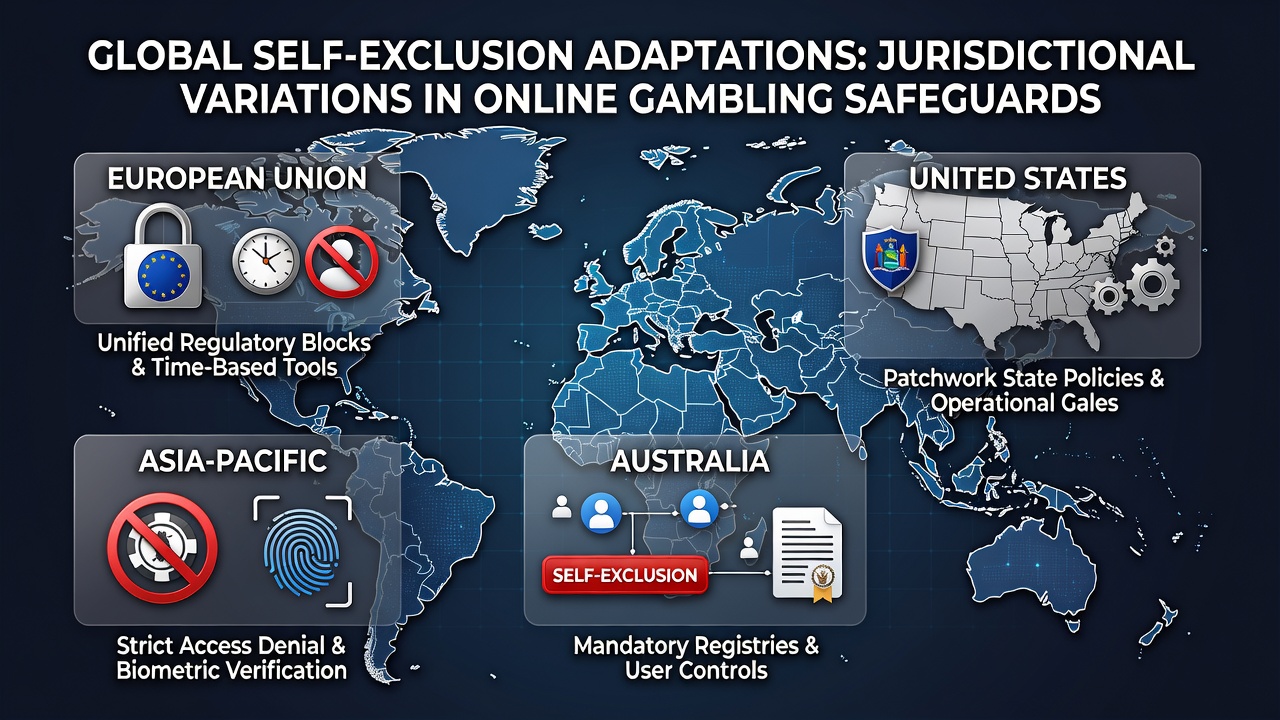
Regulatory bodies in multiple countries continue to refine self-exclusion mechanisms as digital gambling expands, with updates reflecting technological capabilities and cross-border player mobility. Australia implemented a national self-exclusion register in 2023 that connects state-based systems, allowing participants to block access across licensed operators through a single application process, while data from the Australian Communications and Media Authority shows participation rates increased by 18 percent in the following year.
European Regulatory Approaches
Germany introduced the Glücksspielstaatsvertrag framework that mandates centralized self-exclusion databases for all online operators, requiring real-time verification against a national registry before account creation or deposit processing. Spain's Directorate General for the Regulation of Gambling maintains a similar exclusion list that integrates with operator platforms through automated API connections, and operators must suspend accounts within 24 hours of a self-exclusion request. Sweden requires all licensed sites to connect to the national Spelinspektionen exclusion system, which blocks players from both online and land-based venues under the same registration.
North American Developments
Ontario's Alcohol and Gaming Commission of Ontario requires all iGaming operators to participate in a province-wide self-exclusion program that includes both online and retail channels, with mandatory identity verification at signup to enforce restrictions. Several U.S. states have adopted similar statewide registries, though implementation varies by jurisdiction with some requiring operator-level exclusions only while others link to broader databases. In September 2026 regulators in multiple Canadian provinces began testing blockchain-based verification tools to improve cross-operator enforcement without compromising user privacy standards.
Asia-Pacific and Emerging Markets
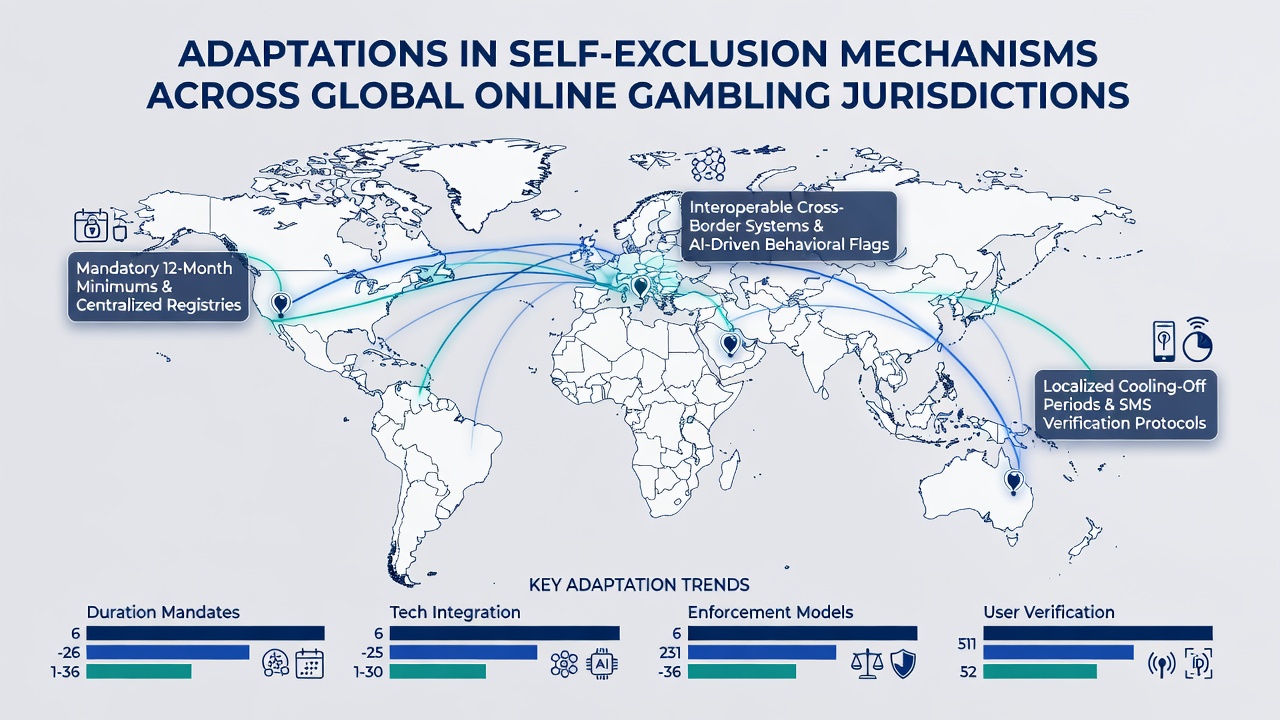
Singapore's National Council on Problem Gambling operates a nationwide self-exclusion program that extends to online platforms through partnerships with licensed operators, while Malaysia's regulatory updates in 2025 introduced mandatory cooling-off periods alongside longer exclusion options. Japan launched its first licensed online gambling framework in 2024 with built-in self-exclusion requirements tied to national identification systems, and South Korea continues to expand its exclusion registry to cover international sites accessible within its borders through payment blocking measures.
Research from the Australian Institute of Criminology indicates that integrated databases reduce repeat registrations across multiple operators by 32 percent compared to fragmented systems. Industry reports from the European Gaming and Betting Association highlight that automated verification tools now process exclusion requests in under one hour in several member states, though enforcement gaps remain when players use VPN services or unregulated platforms.
Technological Integration Trends
Operators in regulated markets increasingly deploy facial recognition and device fingerprinting to strengthen self-exclusion compliance, while some jurisdictions now require periodic re-verification of exclusion status. Data sharing agreements between regulators in Australia and New Zealand allow mutual recognition of exclusions, and similar bilateral discussions continue between Canadian provinces and certain U.S. states. Academic studies from the University of Sydney's Gambling Treatment Clinic document that longer exclusion periods correlate with higher sustained compliance rates when combined with support service referrals at the time of registration.
Conclusion
Jurisdictions worldwide continue adapting self-exclusion mechanisms through centralized databases, automated verification, and cross-border cooperation to address the challenges of online gambling accessibility. These developments reflect ongoing efforts by regulators and operators to balance player protection requirements with technological feasibility across diverse legal frameworks.